

Frequently asked questions
Your questions, answered.
Straight answers about my background, my sessions and how I work.
Ask your own →
Background
Research meets practice
What is your background in AI?
I am an AI researcher with an MSc in Data and AI Ethics, with Distinction, from the University of Edinburgh, and I conduct ongoing research in education, leadership and AI. I combine this research with practical AI expertise, which gives me a nuanced perspective. I teach practical AI literacy for productivity that stays human-focused, with ethical considerations built in. I have delivered 200+ speaking engagements, and I also speak on communications, leadership, workplace readiness, change management, ethical AI adoption and AI strategy. For more information, explore my work.
What does "ethical AI adoption" mean?
By ethical AI adoption I mean deciding where AI is useful, whose interests it serves and who is accountable, with attention to privacy, accuracy, fairness, transparency and human judgment.
Sessions and booking
Planning your event
Keynotes, workshops, Q&A, panels, half days, full days or several days. Based in Alberta, Canada, and travelling internationally.
How do I book you?
Complete the inquiry form with a few details about your event or project: audience, date range, format and your goals. I follow up personally to talk about fit, and then send a short written proposal with the sessions, fee and travel arrangements before anything is agreed.
How far in advance should we book?
As early as you can, especially for in-person events that involve travel. I try to be flexible, so if your date is close, get in touch anyway.
Can we combine a keynote with a workshop, Q&A or panel?
Yes. You can book a keynote, workshop, Q&A, panel or any combination of these, as a half day, a full day or several days.
Where are you based, and do you travel?
I am based in Alberta, Canada, and I travel internationally.
Do you customize your keynotes and workshops?
Yes, always. Before the session we have a planning call, and I tailor examples, stories and tools to your audience, sector and the decisions they face. I will often ask what you want people to be able to do or decide differently afterward, because that shapes the session more than the topic does. New topics, unrelated workshops and bespoke materials are scoped separately.
Do you offer virtual sessions?
Yes. I speak in person and virtually.
Do you share slides, recordings or take-home resources?
Yes to all three. I share my slides, recordings are fine, and every session comes with take-home resources your team can keep using.
How are fees determined?
Keynotes start at 10,000 and virtual sessions begin at 1,500, with special consideration for nonprofit and education groups. Beyond that, fees depend on the format, the amount of preparation and tailoring, and the scope. After you complete the inquiry form and we talk, I send a written proposal with the fee, plus travel expenses if travel is required.
Working with Rebecca
How I work with you
Who do you work with?
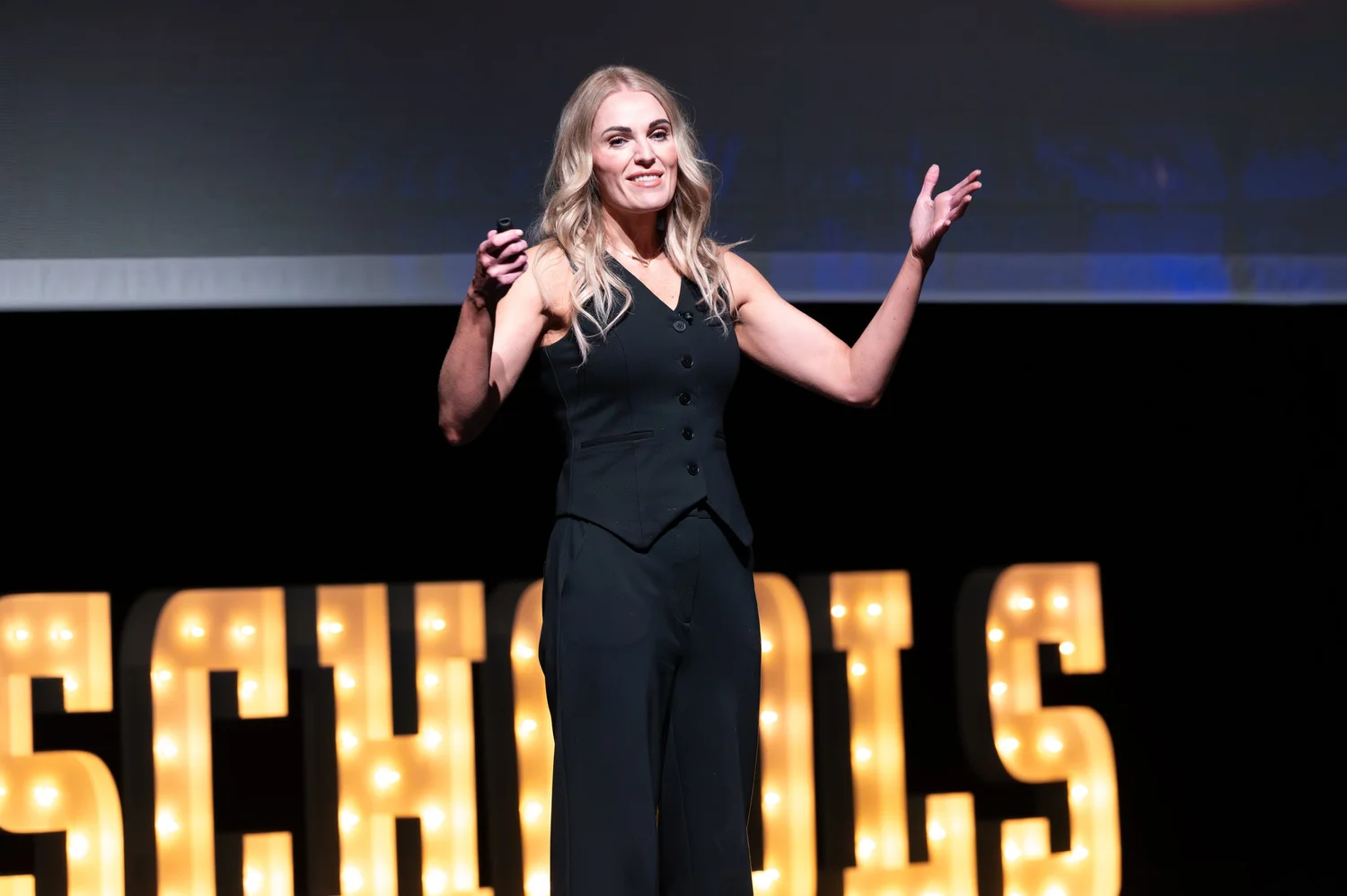
I work with K-12 school districts across North America, public sector teams, nonprofits, professional associations and corporate leadership teams. I have spoken for associations including IABC, NSPRA and its state and regional chapters (more than a dozen), CACE, and at conferences such as MAICON, Upper Bound and the SchoolCEO conference.
What topics do you speak about?
I speak on almost every part of the AI conversation, and every session is shaped around the people in the room. Common themes include:
- Where we really are with AI: plain-English AI, what is real, what is hype and what is coming next.
- Ethics and trust: ethical AI beyond the mission statement, AI policy that actually gets used, deepfakes, and the AI confidence crisis.
- Practical use: hands-on sessions with the tools that are worth your time.
- Moving the whole organization: AI literacy from the boardroom to the breakroom, workforce readiness and change management.
- Leadership: leading when the answers are not clear yet, and authentic leadership in the AI era.
- Education: AI in K-12, AI and assessment, what parents need to know, and community conversations about AI.
- Your sector: I have spoken to real estate professionals, communicators, pension and benefits professionals, nonprofits, universities and authors.
Formats include live "Real or Fake?" detection challenges, hands-on tool workshops and community town halls.
Can you help our organization with an AI policy or strategy?
Yes, in a bounded way. I work with leadership teams on practical, human-centred guidelines and decision frameworks, including how to respond to deepfakes and other emerging problems, and I scope that advisory work separately from a speaking engagement. We start with your goals and who will decide, and agree on outputs in writing before work begins.
Do you train school leaders and communicators?
Yes. Half-day workshops, executive sessions and PD days are built for superintendents, cabinets, boards, school communicators and leadership teams. I was a school district director of communications for seven years before working independently, and I am an APR-accredited public relations professional, so the sessions are written for people who have to explain decisions to families and the public.
How do you work with schools?
I always recommend starting with teachers. While I am there, I also like to meet with student groups and with parents and the community, so everybody is part of the same conversation. It helps level-set, and it gathers engagement data that helps schools make good decisions and build policy.
Do you speak to students and parents?
Yes, and I recommend it. When students, parents and staff hear the same message, the conversation at home and at school starts from the same place.
What will our people walk away with?
People will be empowered. They will have a strong understanding of the nuance in the AI conversation, concrete next steps, and resources that make it easy to understand, along with permission to think about AI with a lot more nuance.
Do our people need a technical background?
No technical background required.
Are you independent, or do you sell AI products?
I am fully independent. I do not sell or endorse any AI products.

Deepfakes and school safety
The image may be fake. The harm is real.
What schools ask me before they bring me in.
01Why do schools and districts bring you in on deepfakes?
Because a deepfake incident is not a technology problem first. It is a safety, communication and leadership problem that moves faster than most plans allow. I studied publicly documented K-12 deepfake incidents and how institutions responded for my MSc in Data and AI Ethics, with Distinction, at the University of Edinburgh, and I spent seven years as a school district director of communications. I bring both to the room: what the research shows, and what it is like to be the person who has to respond.
02What do your deepfakes sessions cover?
What deepfakes and nudify apps are and why they have reached schools, where real incidents have gone wrong, and how leaders, communicators and boards can be ready before one happens. Every session is built around your context, your audience and the decisions your people will actually face.
03Can you help us prepare before an incident happens?
Yes, and that is the best time. I work with superintendents, cabinets, boards, communicators and leadership teams so they are ready before they need to be.
04How can you help our district with deepfakes?
My keynote "Deepfakes at the Door" draws on my University of Edinburgh master's research into publicly documented K-12 deepfake incidents and how institutions responded, plus a chapter on generative AI in crisis and risk communication and a SchoolCEO Magazine feature. Sessions run as keynotes, workshops for leadership and communications teams, or executive sessions for cabinets and boards, and I can adapt them for virtual delivery. Private case details from my research stay private.
Still have a question?
Ask your own →